
The Pabellón de Historia Natural de la UAL focuses on arid zones
Topics Almería Pabellón de Historia Natural Universidad de Almería
90% of the specimens exhibited by the Pabellón de Historia Natural de la Universidad de Almería come from the province.
AlmeríaYa newsroom ·
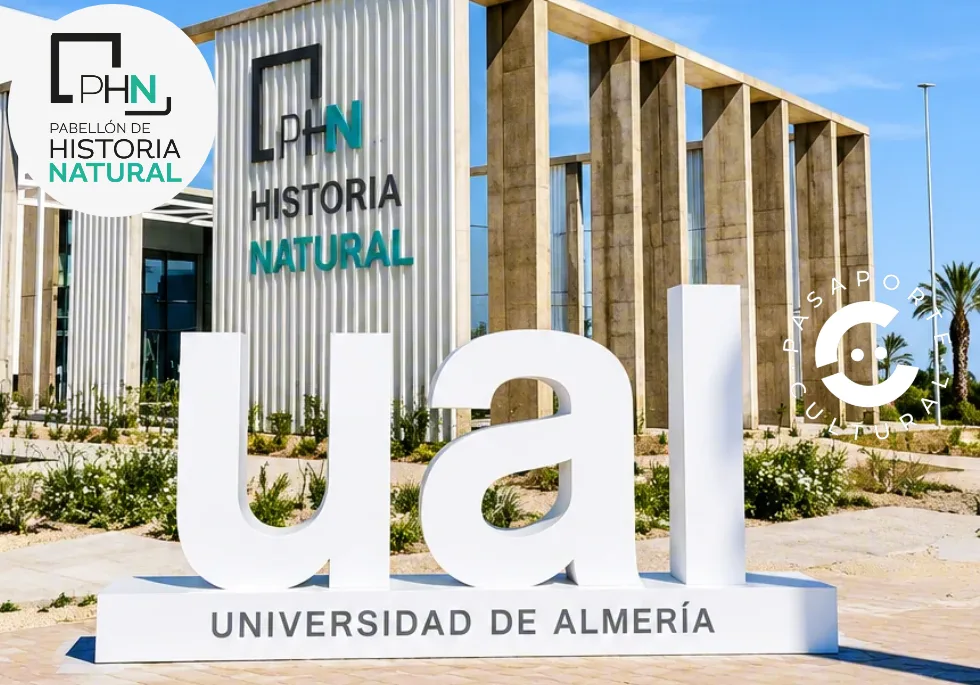
Nine out of ten pieces that can be seen in the Natural History Pavilion of the University of Almería (UAL) come from the province. The academic institution explains that they are intended to show the little-known richness of Almería's geology and biodiversity.
The permanent exhibition brings together rocks, minerals, fossils, plants and animals. A good part of that material comes from research done at the university itself. The tour invites visitors to review the natural history and evolution of the territory, with conservation as the underlying message.
The space is organized into three areas. The first is the Biodiversity and Natural History of Almería Room. The second is the Geodiversity Room. The third is the spaces on the upper floor.
The UAL wants the pavilion to be a reference museum on arid zones. The campus already has this facility, alongside which outreach activities were held: the portal reported on November 18, 2026 that the Sala de Grados of CITE V, located next to the Natural History Pavilion, hosted that month the screening of a documentary and a meeting with its director.
The university has also developed conservation initiatives on campus. In a note dated November 20, 2026, the UAL reported on a discussion about the UNIgreen Student Intervention Camp, focused on the protection of marine ecosystems and the reduction of coastal pollution, in which organizers and students took part.
Breaking news from News, on your phone
An alert only when something can't wait. Free, no account needed.
On iPhone, alerts only arrive if you first add AlmeríaYa to your Home Screen. How to do it, step by step
This browser can't receive alerts. Try another one, such as Chrome or Safari.
You've blocked alerts from AlmeríaYa in this browser. You can turn them back on in its settings. How to do it, step by step
Only what can't wait. Change or remove it in my alerts
Shall we let you know what matters?
Phone alerts
On iPhone, alerts only arrive if you first add AlmeríaYa to your Home Screen. How to do it, step by step
This browser can't receive alerts. Try another one, such as Chrome or Safari.
You've blocked alerts from AlmeríaYa in this browser. You can turn them back on in its settings. How to do it, step by step