
Columbus Day: 534 years of a history that changed the world and still unites us
Spain celebrates its National Day this October 12, commemorating Columbus's arrival in America in 1492. More than five centuries later, language, culture and millions of human ties form a shared heritage, also marked by the consequences of conquest and colonization.
AlmeríaYa newsroom ·

Every October 12, Spain celebrates one of the most significant dates in its calendar. Flags, institutional events and the traditional military parade recall that it is National Day, although for much of the population it is still, simply, Hispanic Day. But behind this day there is much more than an official commemoration: it is one of the events that most profoundly transformed the history of humanity.
On October 12, 1492, three vessels that had set out from the Iberian Peninsula under the command of Christopher Columbus reached American lands. That expedition, financed by the Catholic Monarchs, was seeking a western route to Asia, but it ended up opening a period of permanent relations between Europe and America that forever altered the politics, economy, culture and daily life of both continents.
Today, 534 years later, the consequences of that voyage are still present in hundreds of millions of people. They are in the language they speak, in their surnames, in their cuisine, in literature, in music, in the cities, in beliefs and in a shared history that crosses the Atlantic.
However, understanding the meaning of Hispanic Day requires going beyond symbols. It also means recognizing that that process was accompanied by conquests, wars, diseases, exploitation, slavery and profound transformations of American indigenous societies.
October 12 is, therefore, a date to celebrate Spanish national identity, but also to learn about and reflect on a shared history, extraordinarily rich and complex, that continues to influence our present.
What are we really celebrating on October 12?
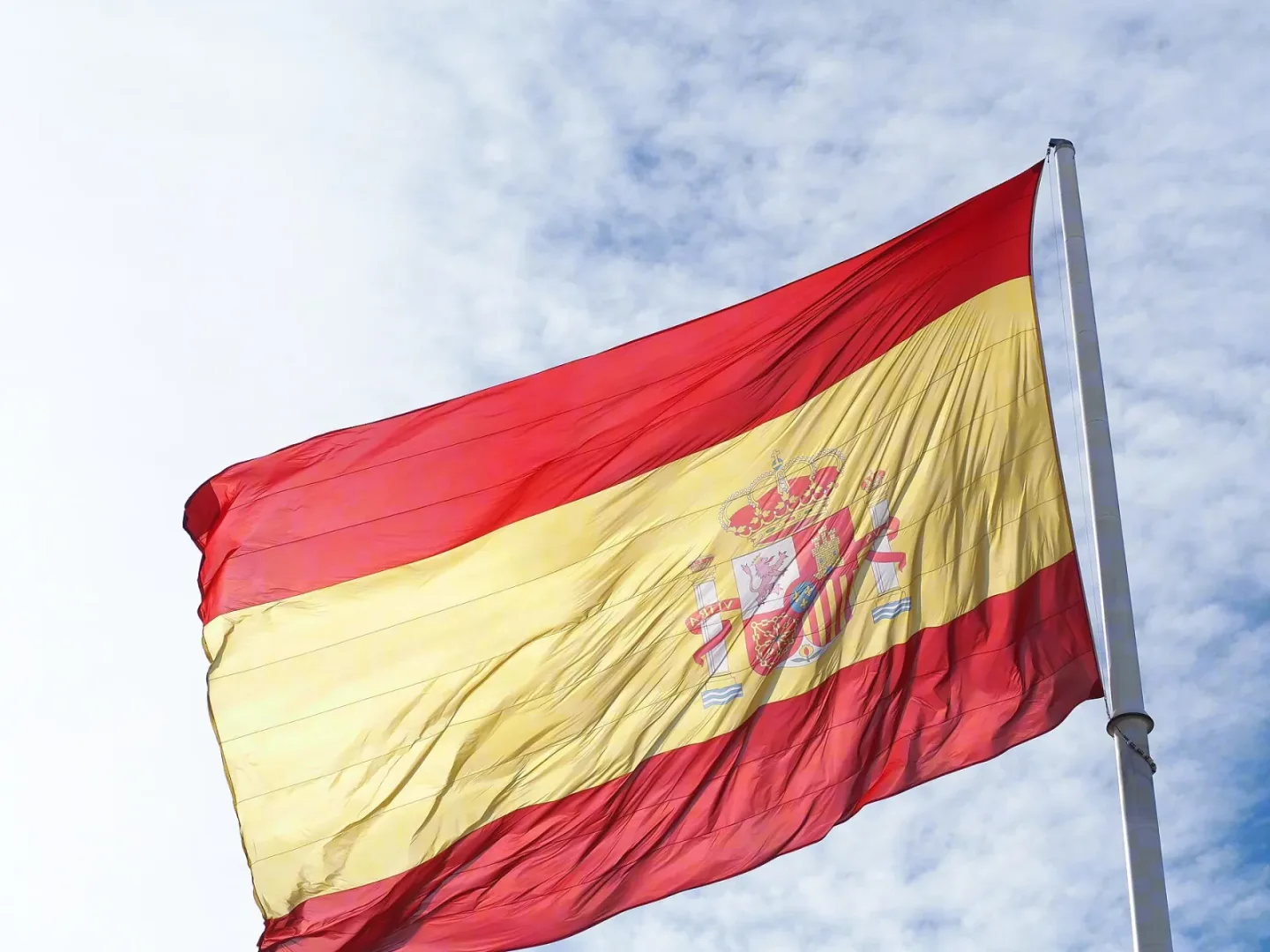
Although it is popularly known as Hispanic Day, its official name is Fiesta Nacional de España, as established by Law 18/1987, of October 7.
The choice of this day is not accidental. The Spanish State linked it to a historical event of enormous significance: the arrival of Columbus's expedition to America and the beginning of the expansion of Spanish influence beyond Europe.
According to the 1987 law, the National Day aims to recall moments of collective history that form part of the common historical, cultural and social heritage. And it presents October 12 as the symbol of the moment when Spain, with the kingdoms already integrated into a single monarchy, begins a period of linguistic and cultural projection beyond European limits.
It is not, therefore, about commemorating a specific military victory or the country's independence, as happens with the national days of many states.
Spain chose a date linked to its history and to its relationship with the rest of the world.
This circumstance gives October 12 a particular dimension: it is a Spanish national celebration whose historical meaning transcends the borders of Spain and connects directly with many other peoples.
The word Hispanidad itself expresses that idea of a cultural and linguistic community. It does not refer to a single nationality or a uniform identity, but to a broad space of societies that share historical and cultural elements and, especially, the Spanish language.
1492: the voyage that changed the course of history
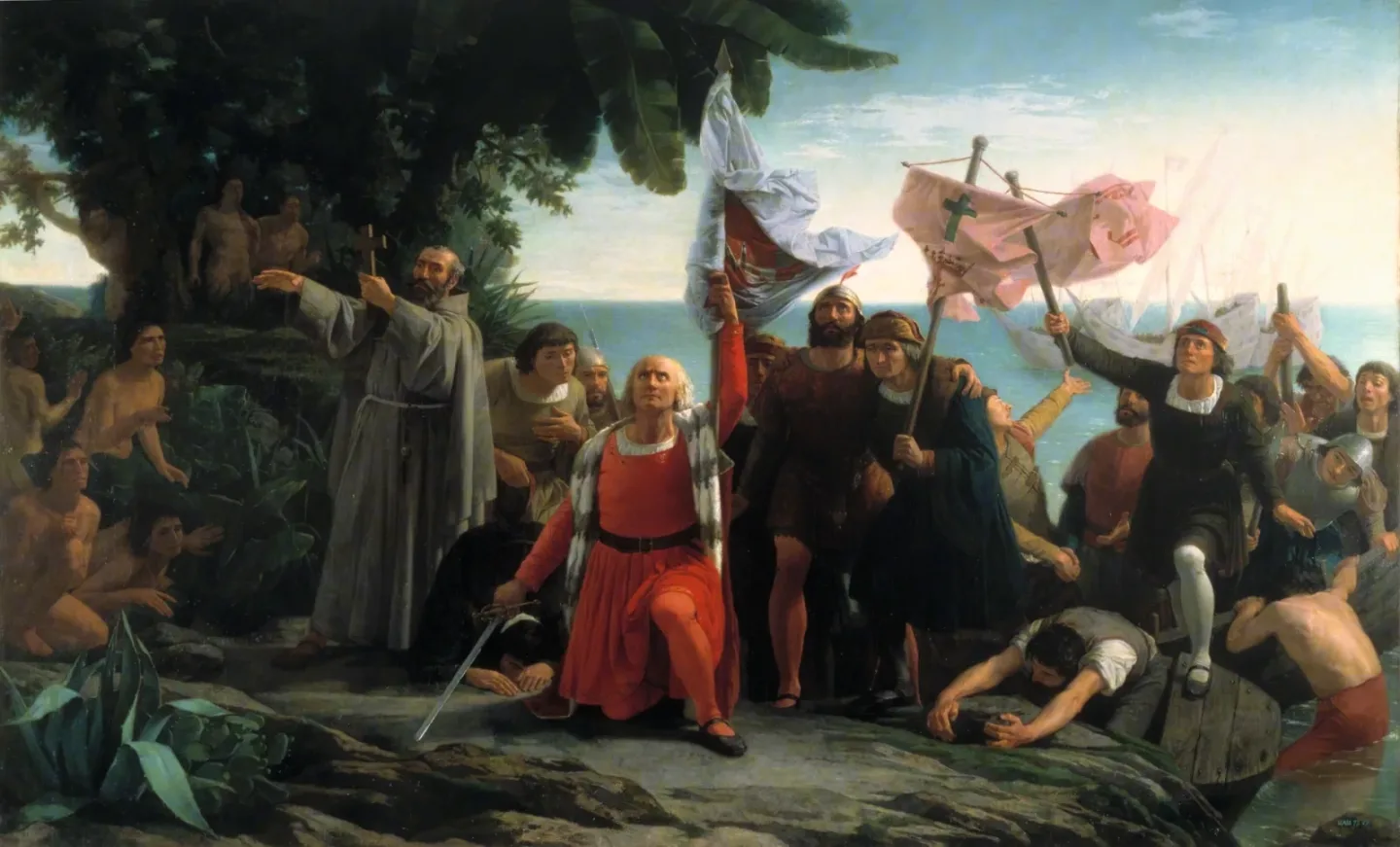
To understand the importance of October 12, we must go back to the end of the 15th century.
Europe was seeking new trade routes to Asia, a territory from which products as coveted as spices, silks and other goods of great economic value arrived.
Christopher Columbus, convinced that he could reach Asian lands by sailing west, finally obtained the backing of Isabella of Castile and Ferdinand of Aragon.
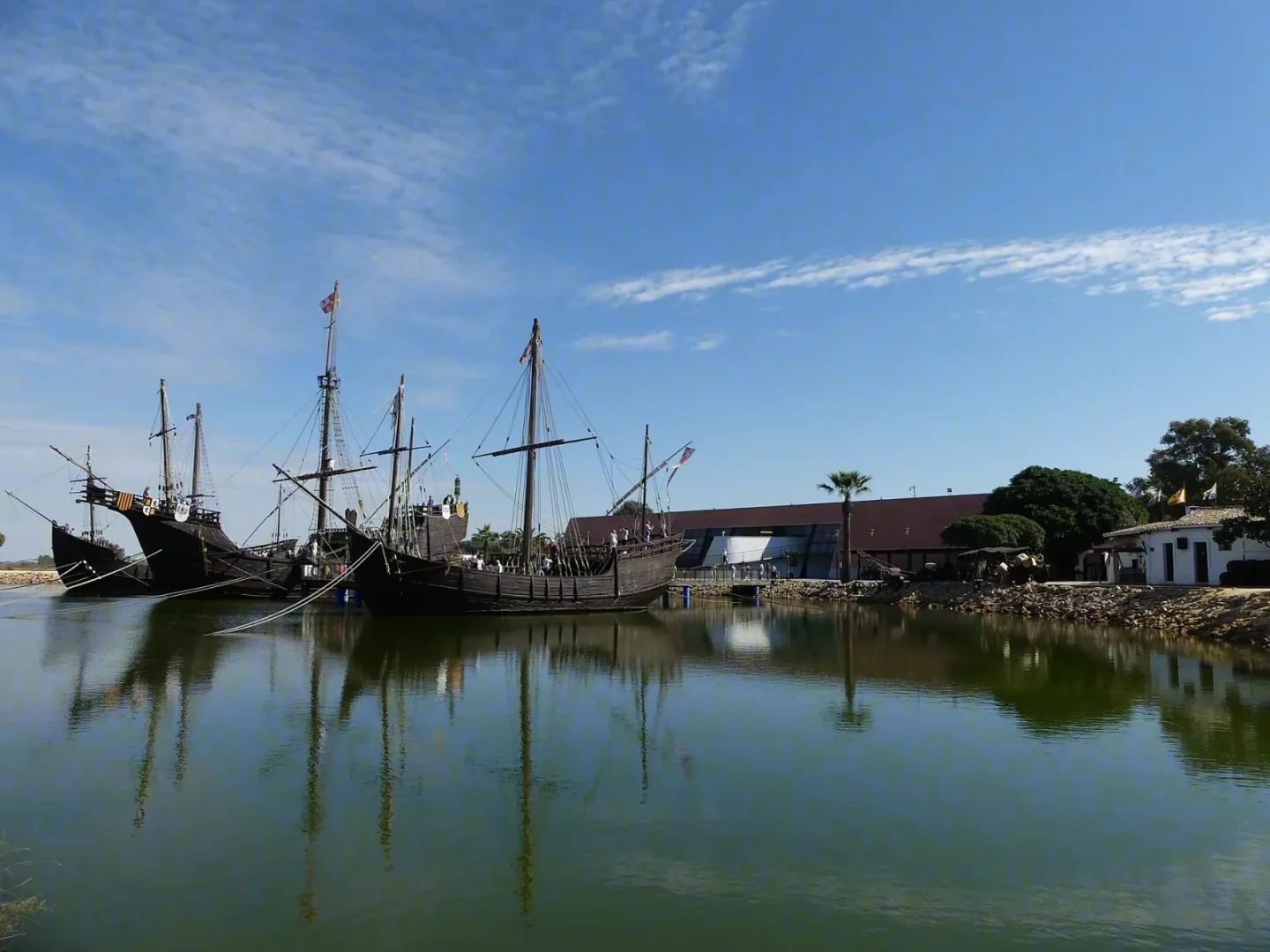
On August 3, 1492, the expedition set out from the port of Palos, in the current province of Huelva, with three vessels: the nao Santa María and the caravels Pinta and Niña.
After stopping in the Canary Islands, it continued its navigation across the Atlantic until, in the early hours of October 12, its crew sighted land.
They had reached an island in the Bahamas archipelago, known by its inhabitants as Guanahaní and named San Salvador by the expedition members. Which of the current islands it exactly is is still debated.
Columbus believed he had reached territories near Asia. He was not aware that that crossing was beginning a decisive stage in relations between two great geographical areas until then separated by the Atlantic.
Traditionally, this event has been called the «discovery of America». However, the expression requires an important historical precision: America was not an empty territory or one unknown to its inhabitants.
Long before the arrival of Europeans, the continent was populated by millions of people belonging to an extraordinary diversity of peoples and cultures. There were great civilizations, complex political organizations, trade networks, cities and advanced agricultural, mathematical and astronomical knowledge.
Furthermore, Viking navigators had reached North American lands several centuries before Columbus.
The uniqueness of 1492 was therefore not the first human presence or even the first European arrival in America, but the beginning of sustained transatlantic contact that would end up profoundly transforming both continents and, subsequently, much of the planet.
From the Day of the Race to Hispanic Day
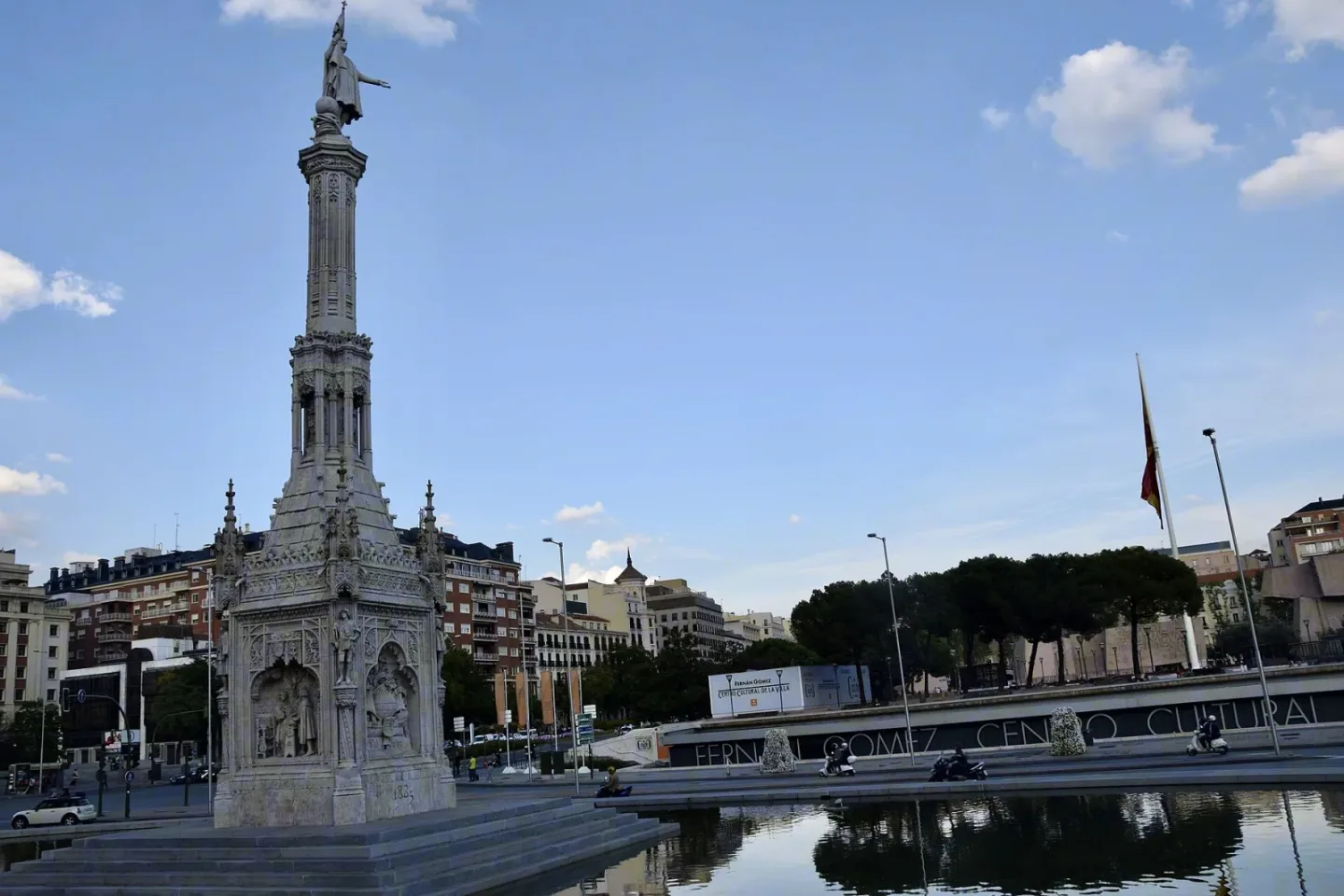
Although the event being commemorated took place in 1492, the celebration of October 12 as a national holiday is much more recent.
One of its first major institutional precedents is found in 1892, when, on the occasion of the fourth centenary of Columbus's arrival in America, a royal decree by the regent María Cristina declared October 12 of that year a national holiday.
During the first decades of the 20th century, the name Fiesta de la Raza spread, an expression that at the time sought to allude to the historical and cultural ties between Spain and the Spanish-American nations, although today it is problematic because of the racial and exclusionary connotations it can convey.
In 1918, during the reign of Alfonso XIII, October 12 was officially declared a national holiday on a permanent basis.
Over time, proposals arose to replace that name with another that better reflected the cultural community formed around a shared language and history.
Thus the term Hispanidad gradually became established, defended during the 20th century by various intellectual figures and used officially to name the holiday in 1958, during the Franco dictatorship.
The arrival of democracy opened a new stage in the institutional interpretation of this date. Finally, in 1987, the Cortes Generales passed the law that definitively established October 12 as the Fiesta Nacional de España.
Since then, that has been its legal name, although the name Día de la Hispanidad remains deeply rooted in everyday language.
The evolution of its names also reflects the changes experienced by Spanish society and by its way of interpreting the past.
A transformation that went far beyond Spain and America

Columbus's voyage had consequences that those who took part in that expedition could hardly have imagined.
From 1492 onward, the exchange of people, products, animals, knowledge, diseases and customs between territories that had evolved separately for centuries began to intensify.
Historians use the expression Columbian exchange to describe much of this process.
From America came to Europe foods that are now essential in our daily lives, such as the potato, the tomato, corn, cocoa and certain varieties of pepper.
It is hard to imagine Spanish cuisine today without a potato omelette, a gazpacho, a sofrito made with tomato or chocolate. However, many of its fundamental ingredients come from the American continent.
The process also worked in the opposite direction.
Europeans introduced crops such as wheat and sugar cane into America, as well as animals such as horses, cows, sheep and pigs, which profoundly changed the agricultural, livestock and commercial activities of many territories.
These exchanges were not limited to food.
Sea routes, economic systems and international political relations were transformed. Atlantic trade acquired growing prominence, while Spain became one of the main powers of the Modern Age.
Later, the routes that connected America with Asia, especially across the Pacific, helped shape exchange networks of global scope.
For this reason, many historians consider that the processes begun at the end of the 15th century played a decisive role in shaping the globalized world we know.
The planet began to be connected in a new way, although that integration developed through deeply unequal relationships and had extraordinary human costs.
The consequences of the conquest: a history that also had shadows
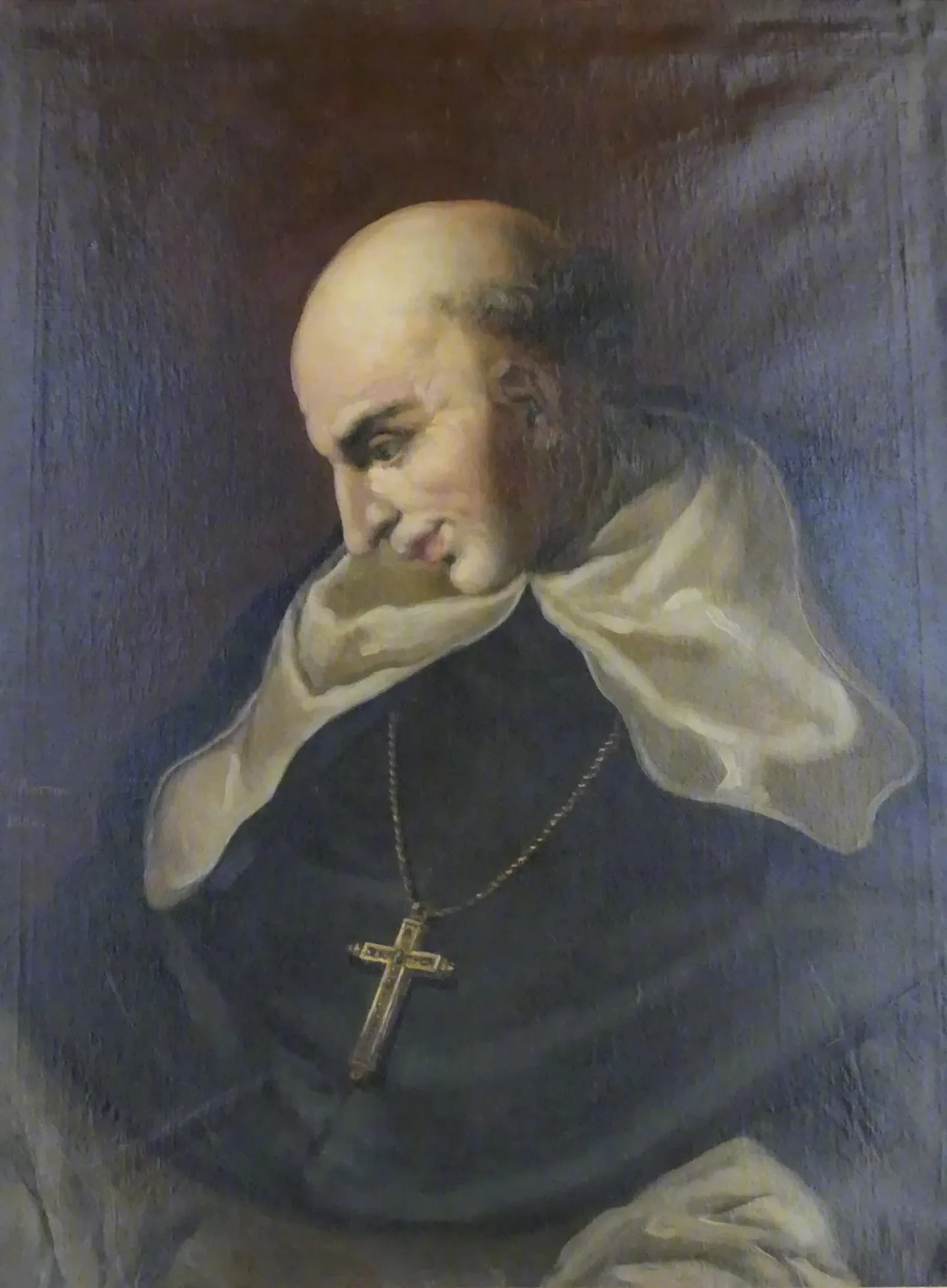
The global dimension of that event cannot be understood without examining its consequences for the peoples who inhabited America before 1492.
The European arrival gave way to processes of exploration, conquest and colonization that profoundly transformed American societies.
The advance of the conquistadors was accompanied by armed conflicts, the imposition of new authorities, the appropriation of territories and resources, and various forms of exploitation of the indigenous population.
Epidemics were one of the most devastating factors.
Diseases from Europe and other territories, such as smallpox and measles, spread among populations that lacked prior immune defenses against them. Over the following decades, they caused a demographic collapse of enormous proportions, aggravated in many places by wars, forced labor, famines and displacements.
The exact magnitude of that catastrophe remains the subject of historical research and varied considerably from region to region.
Systems of exploitation such as the encomienda were also developed, whose application gave rise to significant abuses and forms of coercive labor.
To this was added the transatlantic trade in enslaved African people, a tragedy that affected millions of human beings and in which various European powers, including Spain, took part.
The history of colonization was not identical in all territories either. There were alliances between Spaniards and different indigenous peoples, prolonged resistance, negotiations and societies that preserved part of their own cultural and political structures.
Within the Hispanic world, important debates also arose about the legitimacy of the conquest and the treatment that should be given to indigenous populations.
Figures such as Bartolomé de las Casas denounced the abuses committed, while the Crown promulgated provisions such as the New Laws of 1542, intended, among other objectives, to limit the power of the encomenderos and protect the indigenous people. Their enforcement, however, met with resistance and did not manage to eliminate exploitation.
All of this is an inseparable part of a history that cannot be reduced to an exclusively heroic narrative or to a simplified view of the events.
Recognizing the cultural contributions derived from those centuries does not mean justifying their abuses. Likewise, knowing the consequences of the conquest allows a better understanding of the societies that emerged afterwards and the demands that numerous indigenous peoples continue to raise.
The birth of new societies and cultures
During the following centuries, America underwent profound processes of social and cultural transformation.
Indigenous populations, Europeans and Africans, the latter having arrived in many cases through slavery, took part in very different ways and under deeply unequal conditions in the formation of new societies.
Cultural expressions, traditions and forms of organization emerged that mixed diverse influences.
Architecture, gastronomy, music, the arts, religious beliefs and popular customs received contributions from numerous peoples.
In different American regions, cities, universities, hospitals, churches and administrative institutions were built. At the same time, other earlier structures were destroyed, displaced or transformed, and many indigenous communities continued to preserve their own knowledge and traditions.
Mestizaje, both cultural and demographic, was one of the characteristics of this long process, although it did not always stem from free or egalitarian relationships.
From that history emerged societies with their own identities, which in time led their respective independence processes and gave rise to the present-day Hispanic American nations.
For this reason, speaking of Hispanidad in the 21st century should not mean imagining a prolongation of the old colonial Spain.
It means recognizing the existence of sovereign countries, with different cultures and trajectories, that share certain historical elements without renouncing their individuality.
Spanish: a language shared by hundreds of millions of people
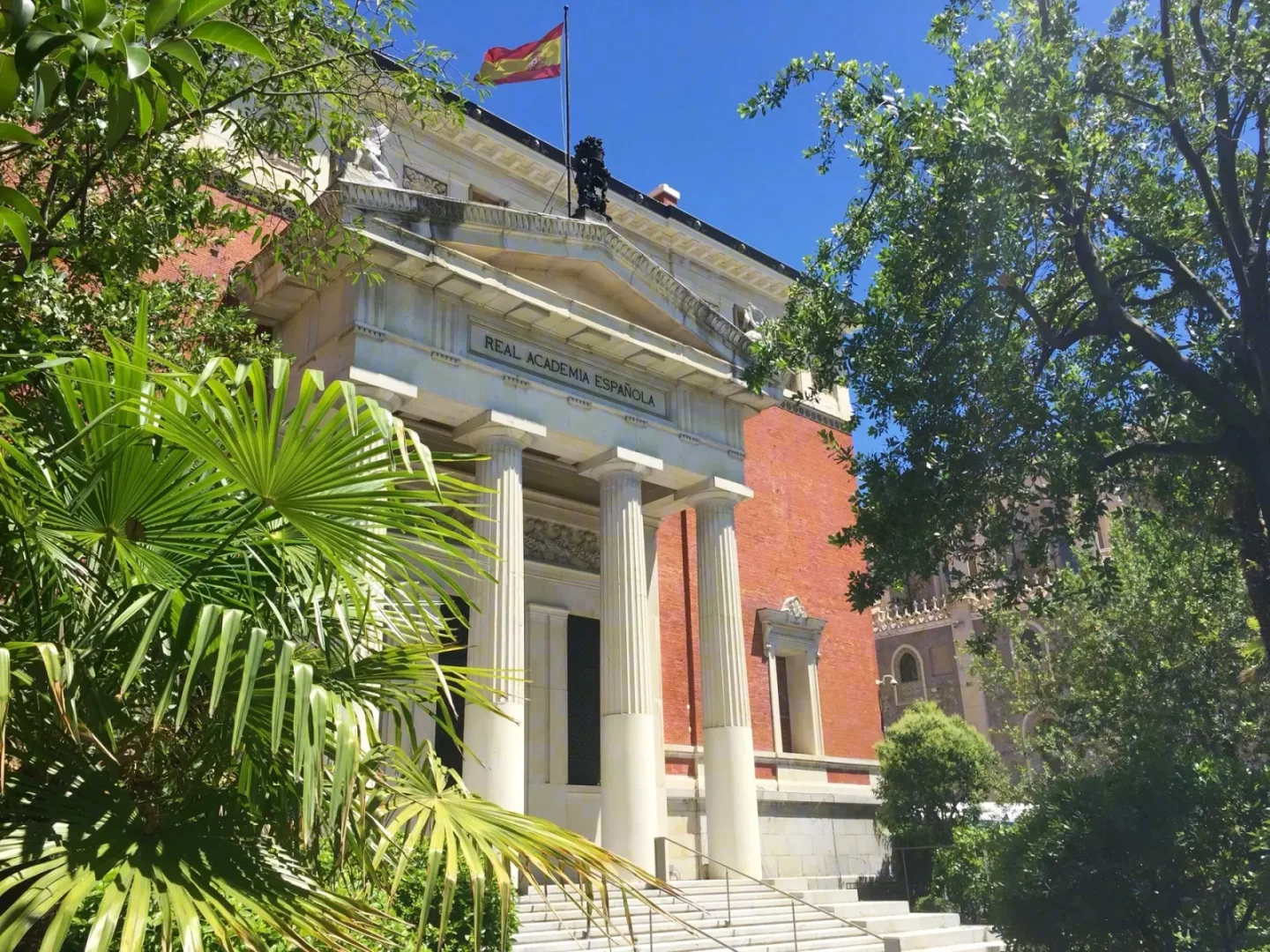
If there is one especially visible element of the relationship between Spain and Latin America, it is language.
Spanish is today one of the main languages of international communication and one of the most important expressions of shared cultural heritage.
According to the 2025 yearbook "El español en el mundo" by the Instituto Cervantes, Spanish has more than 635 million potential users in the world, of whom about 519 million are part of the native-speaker group.
The majority do not live in Spain, but on the American continent.
Mexico, Colombia, Argentina, Peru, Venezuela and the rest of the Spanish-speaking countries have contributed decisively to the expansion, evolution and richness of the language.
Today's Spanish is not exactly the same as the one that crossed the Atlantic more than five centuries ago. It has incorporated words, expressions, pronunciations and ways of understanding the world from very different cultures.
Words such as chocolate, tomate, canoa, hamaca or aguacate recall the influence of American indigenous languages on our everyday vocabulary.
And that richness continues to grow.
The Spanish of Andalusia is not identical to that of Castile; nor is that of Mexico to that of Argentina, Cuba, Colombia or Chile. But all form part of the same linguistic community capable of communicating, creating and sharing knowledge through a common language.
Moreover, this reality does not eliminate the importance of other languages.
In Spain, Catalan, Galician, Basque and other linguistic varieties form part of its cultural diversity. In America, languages such as Quechua, Guaraní, Nahuatl, Aymara or the numerous Mayan languages represent historical heritages of extraordinary value that deserve protection and recognition.
Hispanidad can be understood, in this sense, as a shared space that is enriched by the plurality of its members.
Spanish does not belong exclusively to Spain: it is a living heritage built and transformed by all its speakers.
A heritage that also lives in literature, music and traditions
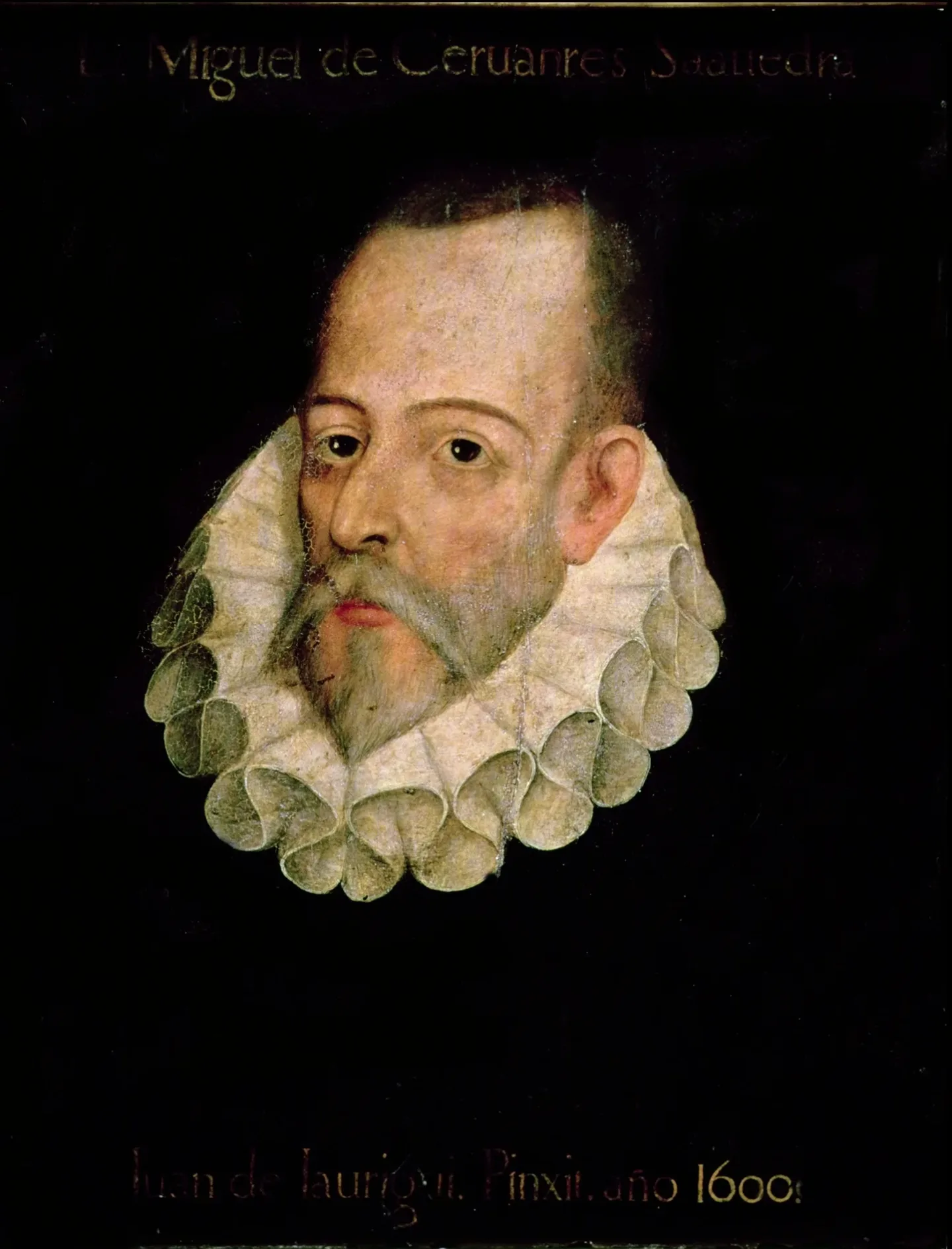
Beyond statistics, the Spanish-speaking cultural community manifests itself daily in countless artistic expressions.
Literature is one of its most representative examples.
Miguel de Cervantes, Federico García Lorca, Jorge Luis Borges, Gabriel García Márquez, Pablo Neruda, Octavio Paz, Mario Vargas Llosa or Isabel Allende, among many others, belong to different national traditions, but they share a language that allows their works to circulate through an immense community of readers.
The same happens with cinema, theatre and music.
Flamenco, tango, salsa, son cubano, rancheras, cumbia or the countless Latin American musical manifestations form part of a cultural universe full of cross-influences.
Not all these expressions have the same origin nor can they be attributed to Spanish heritage. Many draw fundamentally on indigenous, African or other traditions. Precisely their diversity is one of the great characteristics of the societies that arose on both sides of the ocean.
Something similar happens with festivals, family celebrations and religious and popular traditions.
Over the centuries, shared customs have acquired different features according to each territory, adapting to the historical and cultural experiences of their communities.
That capacity to share and transform cultural elements constitutes one of the most enduring links between Spain and the Latin American countries.
What unites us today: much more than a shared history
The ties between Spain and America do not belong only to the past.
In the midst of the 21st century they remain present in family relationships, emigration, tourism, education, international cooperation, research, companies and cultural industries.
Millions of people maintain personal, professional or family relationships between both sides of the Atlantic.
The presence of Latin American communities in Spain has enriched its social and cultural life, just as successive generations of Spanish emigrants contributed to building part of the history of numerous American countries.
In some families, that relationship began centuries ago; in others, barely a few years ago.
But all of them show that Hispanic ties are not limited to the events of 1492.
They manifest themselves when a Spanish family keeps in touch with its relatives in Argentina, when a Colombian student studies a degree at a Spanish university, when a Mexican company collaborates with European professionals or when a song produced in Puerto Rico becomes a hit in Spain.
Also when scientists, doctors, researchers, teachers and artists work together taking advantage of a common language.
New technologies have multiplied these possibilities.
Today it is much easier than ever to share content, knowledge and experiences between countries separated by thousands of kilometres.
The Spanish-speaking community has an extraordinary cultural and economic potential, precisely because it combines ease of communication with the diversity of its societies.
In 1922, Miguel de Unamuno, then rector, spoke at the October 12 event at the University of Salamanca with a warning that, according to the chronicles of the time, sounded like this: «Hay algo muy peligroso en lo de hablar de nación madre y nación hija. Mejor será hablar de naciones hermanas».
More than a century later, those words allow us to interpret the relationship between Spain and Latin America from equality, cooperation and mutual respect.
Why is October 12 not celebrated the same way in all countries?
The historical meaning of this date is not identical on both sides of the Atlantic.
In Spain, October 12 is the National Day and is associated with the memory of Columbus's arrival in America and with Spain's historical and cultural projection.
However, in various American countries different interpretations have developed, especially since the end of the 20th century.
In Argentina, October 12 has officially been called the Day of Respect for Cultural Diversity since 2010, placing the emphasis on recognition of indigenous peoples and on coexistence between cultures.
In Venezuela, the day has been known since 2002 as the Day of Indigenous Resistance, with an orientation focused on remembering the resistance of indigenous communities to conquest and colonization.
Other countries have incorporated names and commemorations related to ethnic diversity, cultural plurality and historical memory.
These differences reflect that the same event can have different meanings depending on the experience of each society.
For some sectors, the date fundamentally represents the birth of a cultural community that continues to unite continents.
For others, it is above all an occasion to remember the consequences of colonization and to claim the rights of indigenous peoples.
Both dimensions are part of the historical and social debates surrounding October 12.
Understanding them does not require that all countries interpret their past in the same way, but rather recognizing that that process left different experiences and that its consequences continue to influence the present.
Why is it celebrated with a military parade?
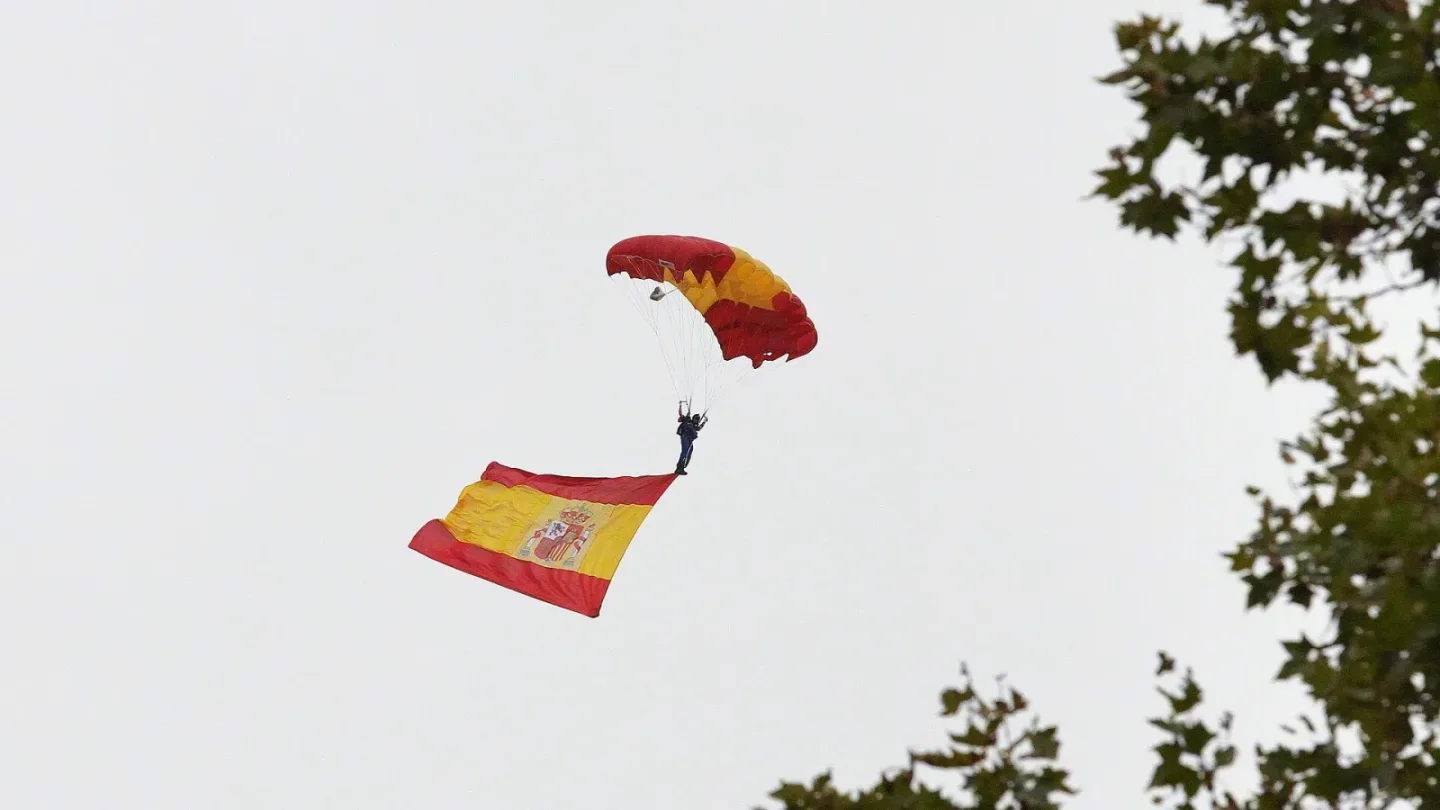
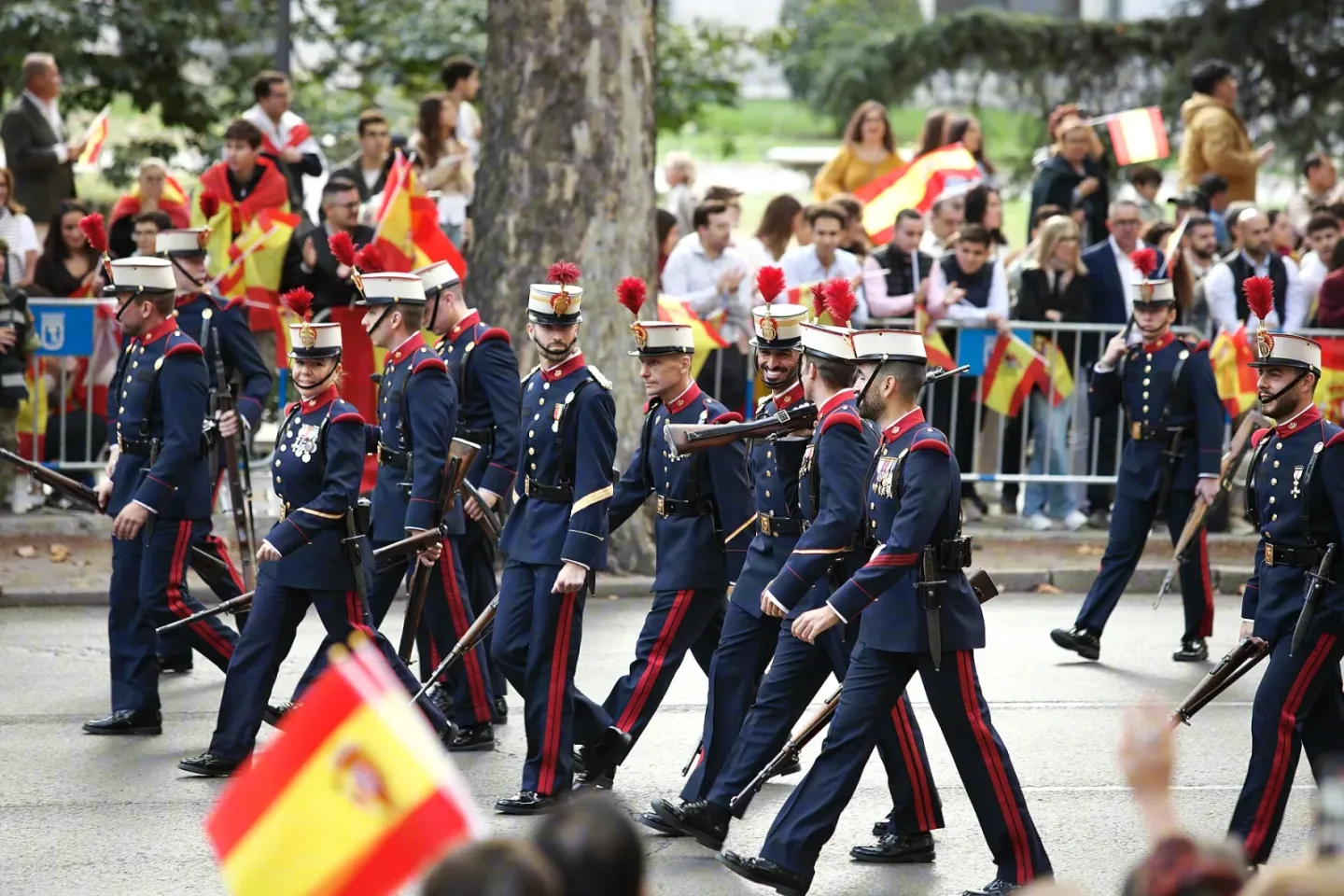
One of the best-known images of every October 12 in Spain is the military parade held in Madrid.
This Monday, October 12, 2026, the central event of the National Day is scheduled from 11.00 hours, presided over by the King and Queen and with the participation of around 4,400 members of the Armed Forces, the State Security Forces and Corps and other institutions.
The route runs along the Paseo del Prado and Paseo de Recoletos, from the vicinity of the Glorieta del Emperador Carlos V to the Plaza de Colón.
The day includes military honours, the tribute to those who gave their lives for Spain, the jump of a paratrooper with the national flag and the air and ground parades.
The military prominence, however, was not always the central element of the celebration.
In its first decades, October 12 had a markedly civic and cultural character. The presence of the Armed Forces gained weight from the 1920s onwards, until shaping the current ceremonies.
The parade today represents the institutional dimension of the National Day and the role of the Armed Forces within the State.
However, the meaning of October 12 is broader than the events held in Madrid. The day is also linked to culture, history, democratic institutions and the plurality of Spanish society.
The National Day belongs to all citizens, regardless of their ideas, origins or ways of understanding Spanish identity.
El Pilar Day: another celebration on the same date
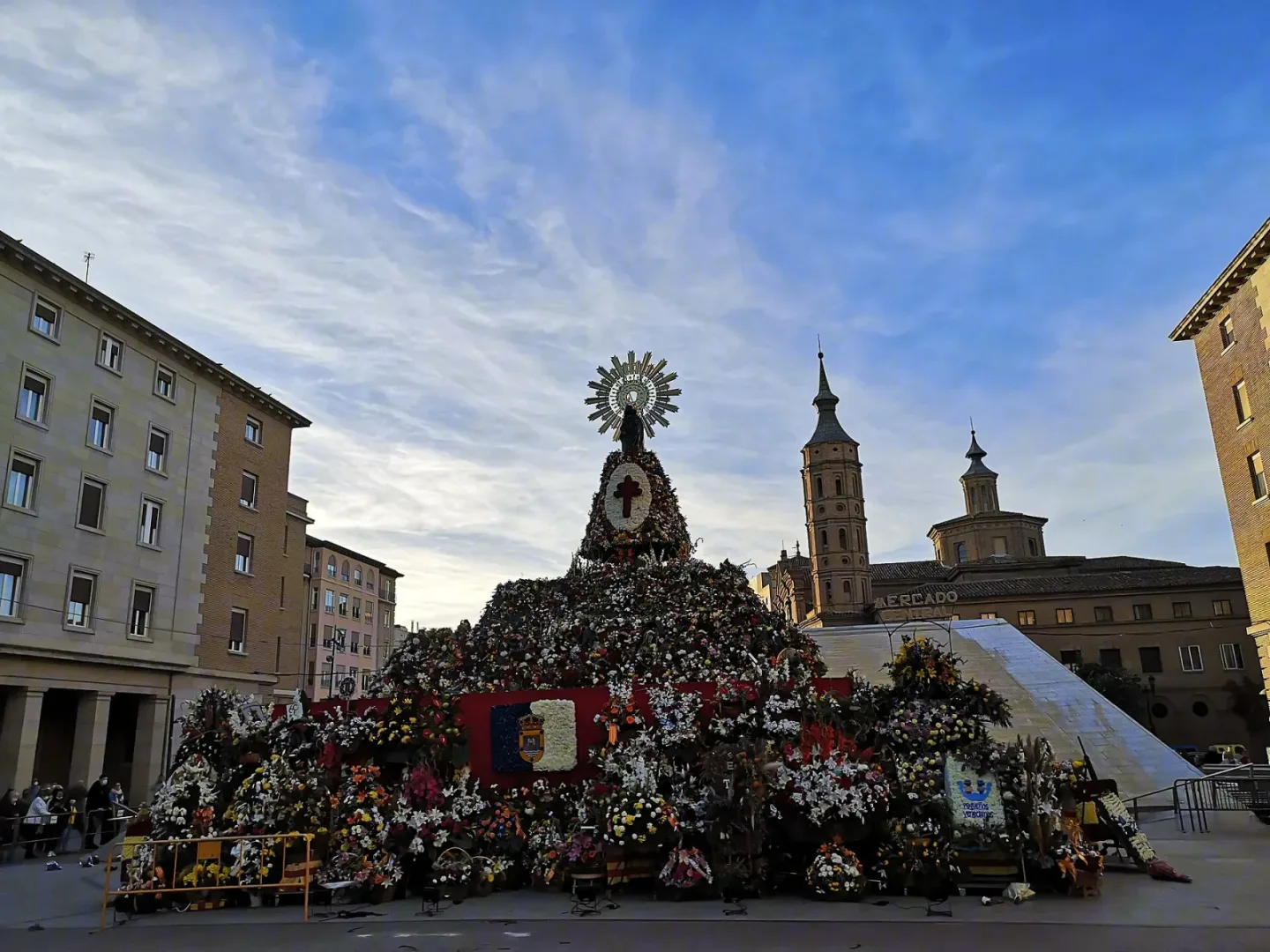
October 12 also coincides with the feast of the Virgen del Pilar, one of the religious celebrations most deeply rooted in Spain.
The day is especially important in Zaragoza and throughout Aragon, where the Fiestas del Pilar bring together numerous religious, cultural and popular activities.
The Virgen del Pilar is, moreover, patron saint of the Guardia Civil, which celebrates its feast day with various institutional events throughout Spain.
Although both commemorations coincide on the calendar and form part of the traditions of the day, it is worth distinguishing them.
The National Day of Spain has a civic and institutional character and its choice responds to the historical event of 1492. The feast of El Pilar belongs to the religious sphere and to the traditions linked to this Marian devotion.
The importance of remembering without forgetting
The history of Spain cannot be fully understood without America. And the history of much of America cannot be explained without the events that began at the end of the 15th century.
For centuries, events, human relations, political structures, economic exchanges and cultural transformations were shared that left a deep mark on both sides of the Atlantic.
That heritage remains in languages, customs, historical heritage and present-day societies.
But remembering it also invites us to understand the human consequences of conquest and colonization, to recognize the cultures that already existed before 1492 and to value the contributions of indigenous peoples and of African and Afro-descendant communities.
It is not necessary to hide the painful episodes of history in order to recognize their importance, just as it is not necessary to renounce current cultural ties in order to understand the conflicts of the past.
The historical gaze allows us to distinguish between remembering an event, recognizing its consequences and justifying the decisions of those who took part in it.
And that distinction is especially important when it comes to processes as complex as those that gave rise to present-day Hispanic American societies.
The true value of a shared history
More than five centuries after that October 12, 1492, Spain and the Spanish-American countries are different societies, with their own institutions, identities and projects.
The political reality that for centuries linked numerous American territories to the Spanish Crown no longer exists. But cultural, family, linguistic and human relations that cross borders and generations have survived.
Spanish is one of their great common elements, though not the only one.
We are also united by countless traditions, artistic expressions, migratory experiences, knowledge, affections and ways of sharing life.
And we are united by a history that, precisely because it is shared, must be knowable from all its perspectives.
October 12 invites us to reflect on what it means to belong to a historical and cultural community and on how those bonds can be put to use in the present.
The Hispanidad of the 21st century does not have to be defined by the power relations of the past. It can be understood as a space of cooperation among free, sovereign and culturally diverse societies.
A space in which language facilitates dialogue, culture enables mutual understanding and historical memory helps build relations based on respect.
Spain today celebrates its National Day by recalling an event that occurred 534 years ago. But the significance of that October 12 lies not only in what happened then, but in everything that came afterwards and in the bonds that still exist.
Perhaps one of the greatest lessons of this date lies there: understanding that history can unite us without everyone having to interpret it the same way, that sharing a language does not mean having a single identity, and that acknowledging the wounds of the past is compatible with valuing what we have in common today.
Because, beyond the oceans, the borders and the passage of the centuries, October 12 continues to remind us that our histories are deeply intertwined.
Breaking news from News, on your phone
An alert only when something can't wait. Free, no account needed.
On iPhone, alerts only arrive if you first add AlmeríaYa to your Home Screen. How to do it, step by step
This browser can't receive alerts. Try another one, such as Chrome or Safari.
You've blocked alerts from AlmeríaYa in this browser. You can turn them back on in its settings. How to do it, step by step
Only what can't wait. Change or remove it in my alerts
Shall we let you know what matters?
Phone alerts
On iPhone, alerts only arrive if you first add AlmeríaYa to your Home Screen. How to do it, step by step
This browser can't receive alerts. Try another one, such as Chrome or Safari.
You've blocked alerts from AlmeríaYa in this browser. You can turn them back on in its settings. How to do it, step by step