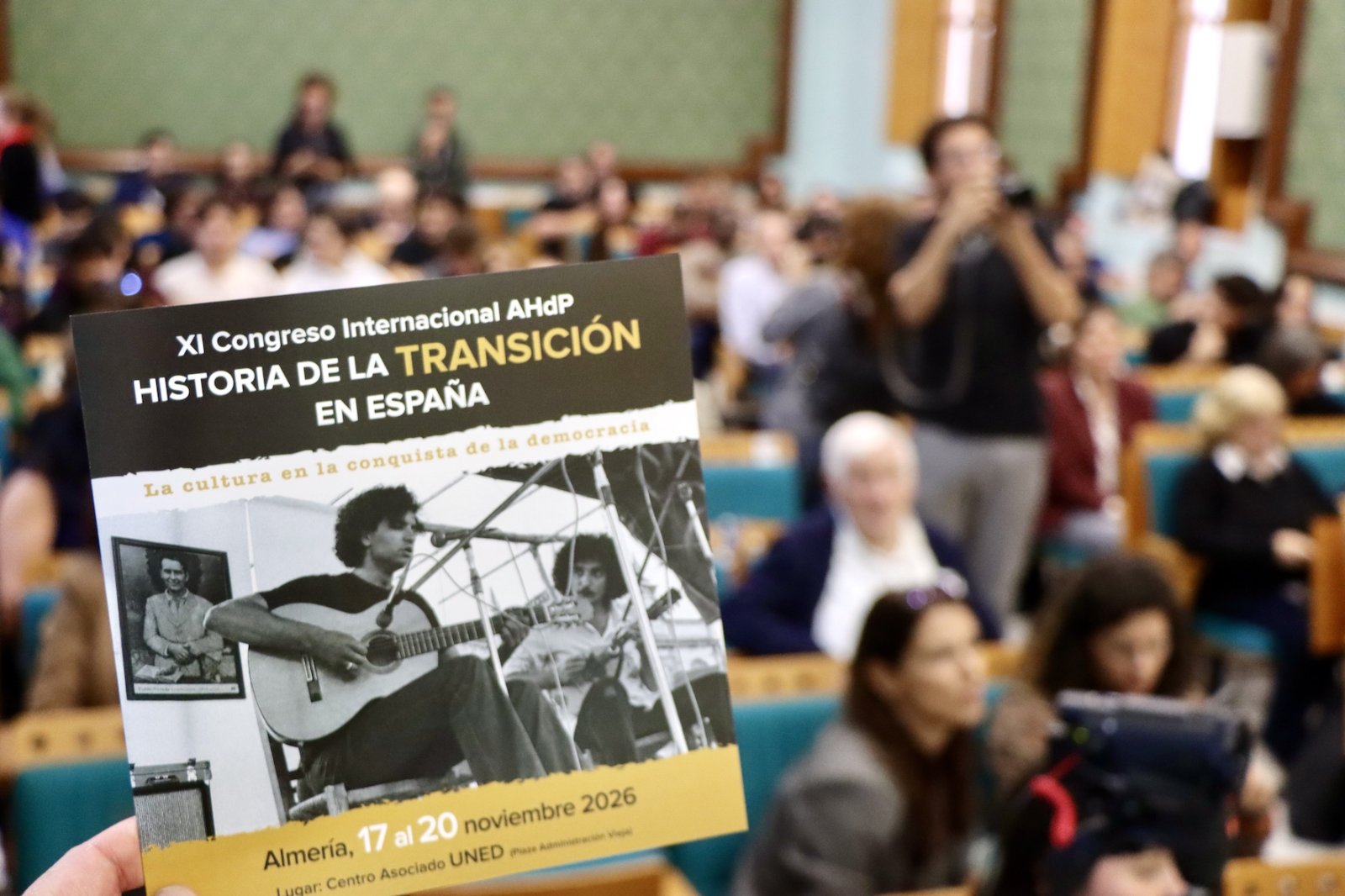
The role played by literature, theatre, cinema, protest songs and free radio stations on the road to democracy is the focus from this Tuesday until Friday, November 20, of the 11th International Congress on the History of the Transition. The sessions are held at the UNED centre in
Almería, in the city centre, and the congress closes on Friday at 20.00 with the concert "Canciones para la libertad", performed by Joaquín Martínez Cortés "Chipo", Antonio Pérez Montoya and César Maldonado.
The programme is organised into five debate sessions: "Cultura y democracia", "Difusión y debate cultural", "Literatura para la libertad", "Cine y cambio político" and "Música para la reivindicación". The papers presented have been grouped into nine thematic panels spread across three parallel sessions. In total, nearly 80 research papers in communication format, which have been published in a book that will arrive in the coming days, as detailed by the organisation.
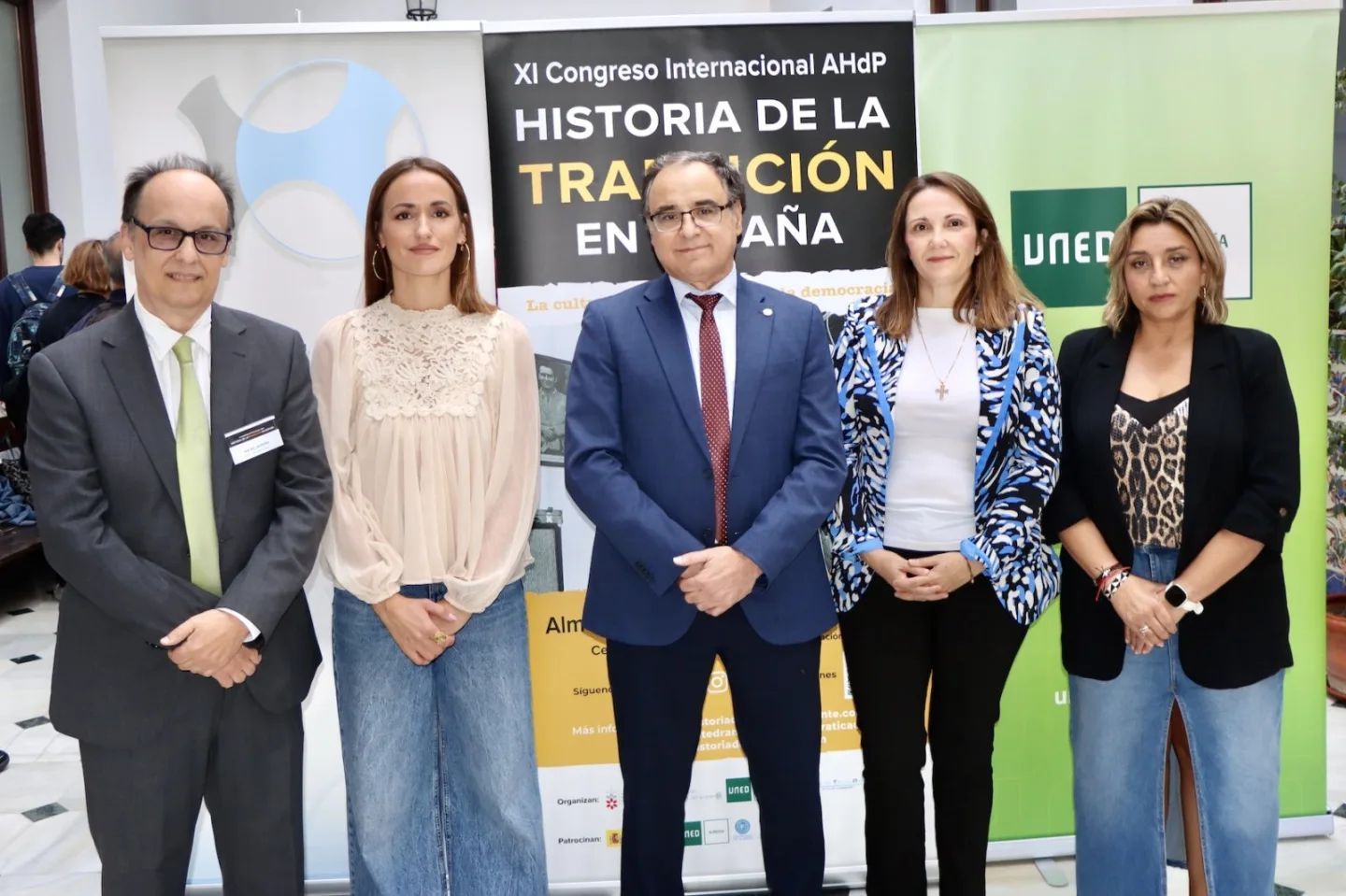
This edition focuses on the avant-garde groups that were active during the dictatorship and the Transition. The rector of the University of Almería (UAL), José J. Céspedes, noted at the opening that culture has "the capacity to transform thoughts and attitudes, to mobilise and to move societies forward". Céspedes recalled that Wednesday, November 18, marks 50 years since the approval in the Cortes of the Political Reform Law, a step he described as "one of the great points of no return on the road to democracy".
Rafael Quirosa-Cheyrouze, dean of the Faculty of Humanities of the UAL, president of the Association of Historians of the Present and director of the Research Group Estudios del Tiempo Presente, explained that the congress addresses this period "always with a underlying philosophy: understanding that democracy did not come only from the decision of certain people, but from the drive of the citizenry". In this edition, he indicated, the organisation has deemed it "opportune" to focus on intellectuals, artists, filmmakers, writers and musicians, who "played a fundamental role" in driving the citizenry.
The acting deputy delegate of the Government of Spain, Dolores Cruz, stated that writers, musicians, filmmakers, journalists and artists "dared to widen the narrow margins of freedom of the time" before freedoms were enshrined in the Constitution. The deputy for Human Resources and Contracting of the Diputación de Almería, María del Mar López, noted that the focus is now on "the role of culture in the conquest of democracy". The director of the UNED Associated Centre in Almería, María del Carmen Pérez, stressed that the congress is "a benchmark activity every two years" for the UNED.
The congress is organised by the Research Group Estudios del Tiempo Presente of the UAL and the Association of Historians of the Present, with the collaboration of the UNED Associated Centre, CySOC and the Chair of Democratic Memory of the University of Almería.